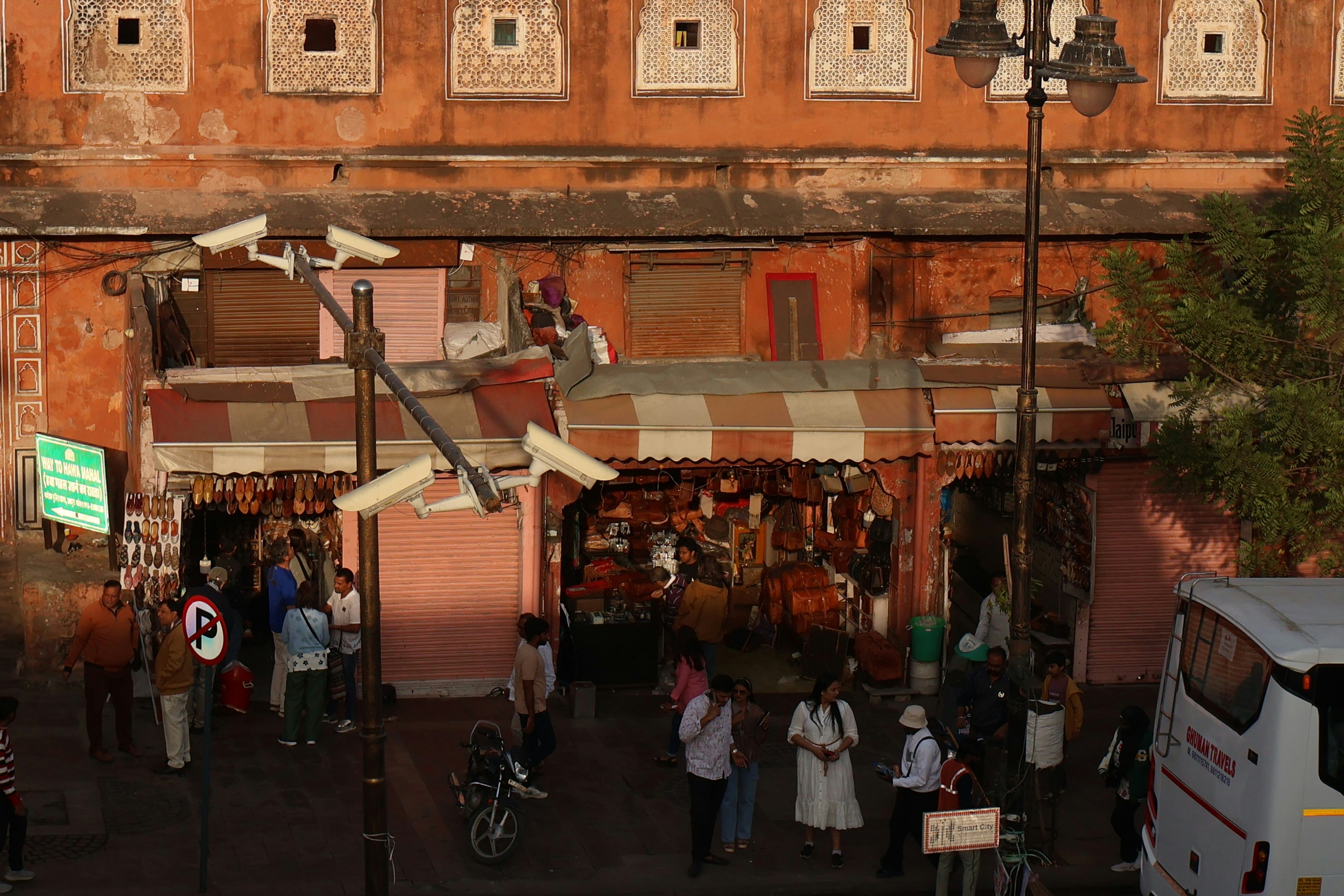
The alley didn't look like a trap. That was the whole point.
He had been wandering through Jaipur's old city the way he always did, without a plan, without an agenda, just following the narrowing of streets until the city felt less like a postcard and more like a place where people actually lived. He had done this in Singapore, China, Japan, Vietnam and in the backstreets of Kuala Lumpur. For him, this was the only way to travel.
During this walk, a young man appeared. He was friendly, curious and practised in the art of casual conversation. Over a cup of tea, they started talking. That was fine by the traveller. He liked talking to locals. That was the whole point.
The tea shop was tucked into a lane he would not have found on his own. The chai arrived in small glasses, the kind that burn your fingers if you hold them wrong. They talked. He relaxed.
Over the next few days, something genuine grew between them. They talked the way people do when neither has anywhere to be, about everything and nothing. The city opened up differently with the young man beside him. They wandered through carpet shops and block-printing studios, past gem dealers and leather workshops, the young man guiding, narrating, and negotiating.
The traveller wasn't naive about what was happening. At the back of his mind, he had always known that the young man was earning a commission off every shop they entered, every purchase he made. He didn't mind. That was a fair trade. The young man's time, his knowledge of the lanes, his easy warmth — none of it was free, and it shouldn't have to be. Most of the time, that is the game: two people playing their roles, both aware, both choosing to enjoy it anyway (think of two spy agents, enjoying the poker face dialogue a little too much). Sometimes, rarely but genuinely, there is no game at all. A tuk-tuk driver who asks for nothing, a stranger who gives directions and disappears, a conversation that leads nowhere except somewhere good. Those moments exist, too. They are just harder to plan for.
What he hadn't signed up for came at the end.
As they were about to part ways, the young man turned to him with a story of family responsibilities, expenses, hardship and asked for a thousand rupees. A clean ask, dressed up as something else.
That was the moment something shifted. Not the commission, he had always known about the commission. What caught him off guard was himself. Somewhere over those few days, he had forgotten. He had let the warmth of it, the realness of the conversations, the easy rhythm of the city pull him so completely into the present that the ending he had always known was coming had simply slipped his mind. And then it arrived, and the surprise wasn't the ask. It was that he had allowed himself to forget.
He gave the thousand rupees anyway. A thousand isn't nothing, but it isn't enough to walk away from a person. The traveller believed that if the story was a lie — if there were no children, no crisis — then that was between karma and the young man. Karma has a longer memory than either of them.
. . .
The traveller has crossed enough borders to know that this is not a Jaipur problem. The tea shop play — or some version of it — exists in every city that attracts travellers with open faces and full wallets. He has seen it across Southeast Asia, felt its edges in South Asia, and noticed its ghost in markets everywhere. It is old, and it is everywhere, and it works because it exploits the best instinct a traveller can have: the willingness to say yes to a stranger.
But what stayed with him, long after the thousand rupees, was a quieter damage.
The next traveller who comes to Jaipur's old lanes, the one who genuinely just wants to talk, the one who is lonely and curious and has no agenda, will meet a version of him that is already on guard, already calculating. Already a little less open than he was before.
That is the real cost. Not the commission. The commission is just money. What gets spent is trust, and trust once spent for someone else's profit is slow to come back.
But sitting with it later, he saw it differently. The young man had given him days; his time, his stories, his city. The thousand rupees, in the end, was not so different from a tip. An unspoken agreement, made explicit at the last moment. Clumsy, yes. Dishonest in its framing, perhaps. But not without its own logic.
This is how it works in many parts of the world. Nothing is entirely free. Warmth has its economy. Generosity moves in circles. If you travel long enough, you stop asking whether an interaction was purely genuine and start asking whether it mattered, because often, it did both.
India has a way of doing that, of offering you something so warm, so unhurried, so alive, that you can't quite call it a transaction even when it is one.
He still walks into alleys. He still drinks the tea. The light stays on. Not as a warning, but as a reminder that the best things in travel rarely come free, and are worth every rupee anyway. This is the game every traveller signs up for, whether they know it or not. As long as one doesn't get badly burnt, it is worth playing.
Ugo is a traveller who passed through Madpackers Jaipur. He narrated this experience to Siddharth, one of the team members, who put it into words.